Why aromatic molecules do their work, even when you can’t smell them
This week I ran a training session for staff at the CJI: “AI-proof your brain”, a programme in which we strengthen your nervous system and build a more resilient brain in a world full of digital stimuli. We worked with breathing exercises, mindful pauses and, of course, essential oils.
And then came the questions.
Two participants asked the same question: neither of them has a sense of smell. One lost it through an accident, the other through a viral infection. And they wondered: “If I can’t smell the oils, do they still have any effect on my nervous system?”
The lovely thing is: I get that question regularly. Through my app, in training sessions, from clients who wonder whether they should still use those bottles now that they’ve (temporarily or permanently) lost their sense of smell.
And my answer is always the same: yes. Essential oils still work. Even without smell.
But I understand you want to know why and how. So let me walk you through what we know about it.
The 3 routes of essential oils: smell is just one of them
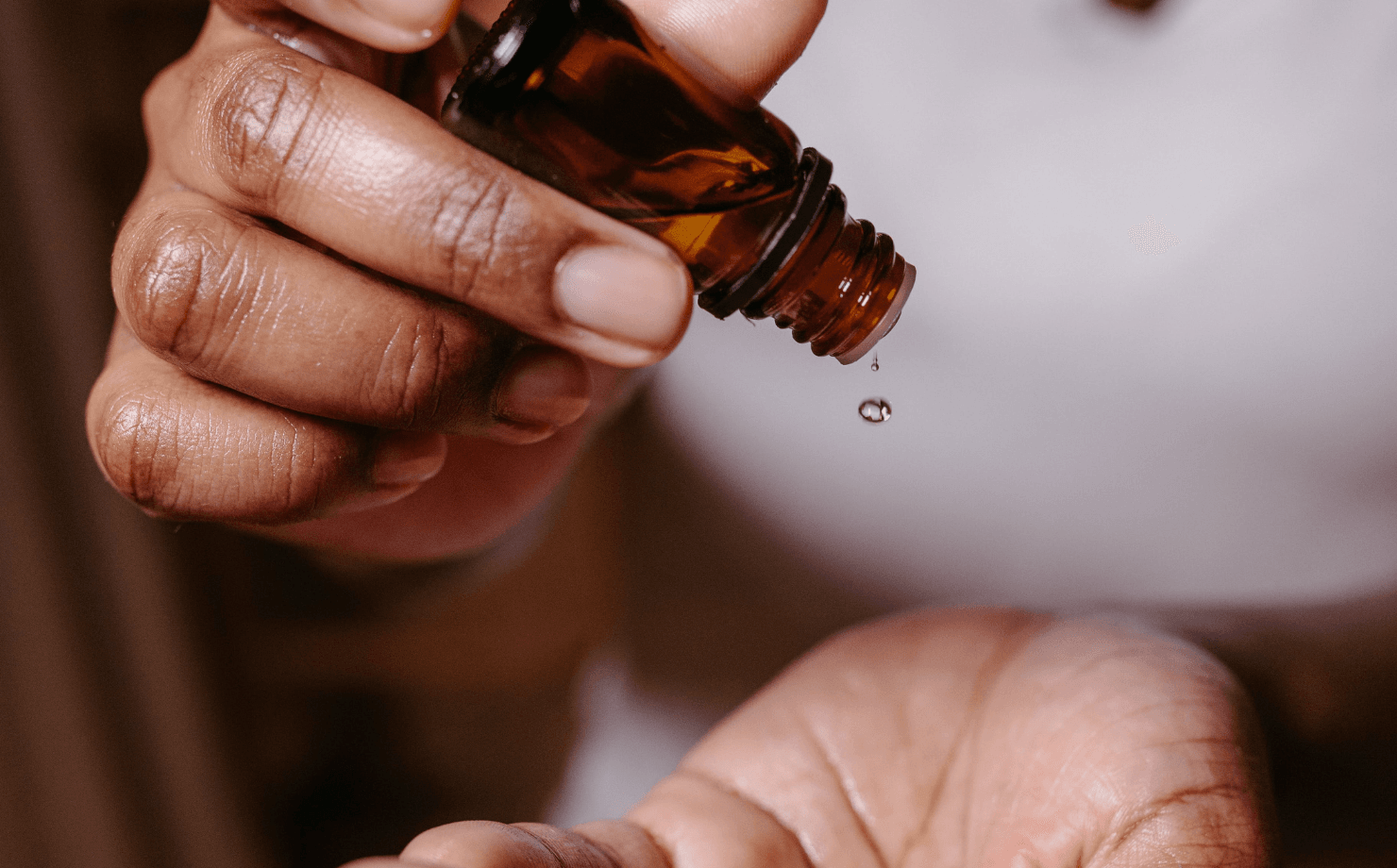
When you use essential oils, they enter your body in three ways and do their work.
1. Aromatic: via your nose to your brain
This is what most people know: you smell lavender, you feel calmer. The aromatic molecules travel via your olfactory nerves to your olfactory bulb, the only point where your central nervous system has direct contact with the outside world. From there, they reach your limbic system, the areas that regulate emotion, memory and stress, within seconds.
This is the fastest route, and certainly not the only one.
2. Topical: via your skin to your bloodstream
Essential oils are lipophilic; they have an affinity with fatty substances. Your skin contains natural lipids, which means the molecules are absorbed effectively.
Studies show that active components are detectable in your bloodstream within 15 to 30 minutes of topical application (Herman & Herman, 2015). One study using lavender oil found that linalool and linalyl acetate (the main components) were detected in the blood after a gentle abdominal massage with a 2% blend, peaking after around 30 minutes.
The molecules circulate through your body and reach your brain, your organs and your muscles. They influence your nervous system, your hormone balance and the cellular communication that supports healthy tissue recovery, without you needing to smell them at all.
3. Internal: via your digestive system
Some oils can be taken internally. They then work via your digestive tract, get absorbed into your bloodstream and reach your whole system that way. This is the most direct systemic route, with no detour via nose or skin.
Safety first. Internal use isn’t for everyone, and not every oil is suitable for it. Only do this with oils that are explicitly intended and labelled for it (with doTERRA, you’ll recognise these by the supplement facts label), following the stated dosage. Not during pregnancy or breastfeeding, not with young children, and always check with a healthcare professional first if you’re on medication. Not sure? Stick to aromatic and topical use; those work regardless.
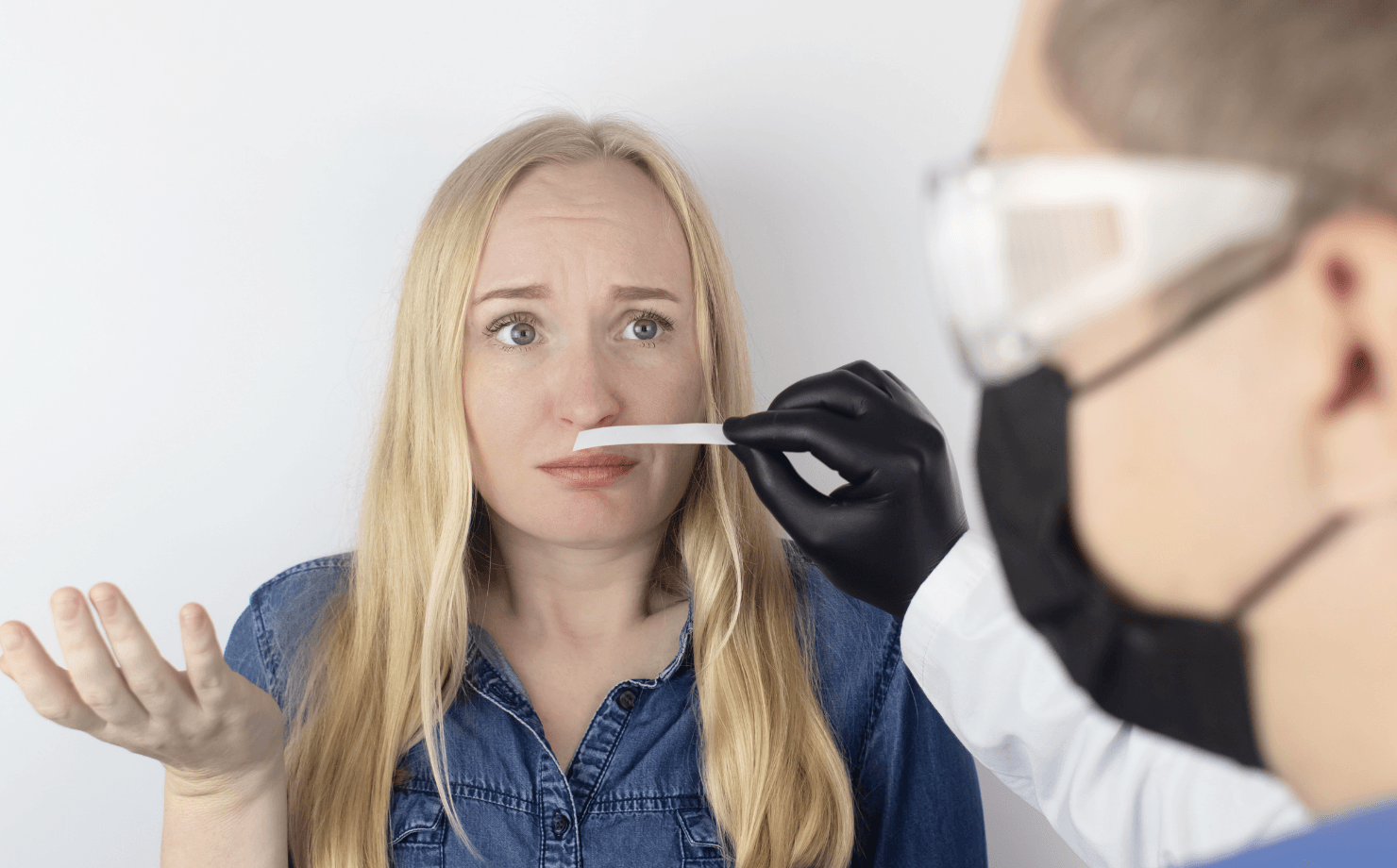
But if you can’t smell, aren’t you missing part of it?
Yes and no.
What you miss: the conscious experience of smell. The emotional association with a scent. That moment of “ah, I can smell lavender, time to relax.”
What you don’t miss: the pharmacological effects. And that applies to all three routes, including aromatic use. That’s the crucial insight research gives us.
Lavender works even with anosmia
A 2013 study (published in Life Sciences) examined whether lavender oil still had an anxiety-reducing effect in mice with anosmia, mice that had artificially lost their sense of smell.
The result: the calming effects of inhaling lavender oil were identical in mice with and without a sense of smell. The researchers’ conclusion: “These results suggest that olfactory system activation is unlikely to participate in the anxiolytic-like effect of lavender essential oil inhalation.”
In other words: lavender’s calming effect works through a different mechanism than smell alone.
TRP receptors: the non-olfactory system
During COVID, many people lost their sense of smell, which led to extensive research into how essential oils work in cases of anosmia.
What scientists discovered: essential oils activate TRP receptors (Transient Receptor Potential receptors), sensors that respond to temperature, pain and chemical compounds. These receptors are found all over your body: in your skin, your airways, your gut. Even when your olfactory system isn’t working, they’re still activated by the molecules in essential oils. That explains why people without a sense of smell still experience effects from topical application or internal use.
Absorption through the skin is powerful enough
Several studies show that components from essential oils are not only absorbed through the skin, but also remain active in your bloodstream: around 4 to 6 hours for most oils, and up to 8 hours for oils like frankincense.
A systematic review of 112 studies (Mwesigwa et al., Scientia Pharmaceutica, 2022) concluded: “Essential oils and their volatile constituents can penetrate through the skin as well as enhance penetration of different drugs from topical formulation into the lower skin layers.” So the effects are systemic; they influence your whole body, including your nervous system, your cellular processes and your hormonal balance.
In practice: how to use essential oils without a sense of smell
Good news: you don’t need to skip a single application method.
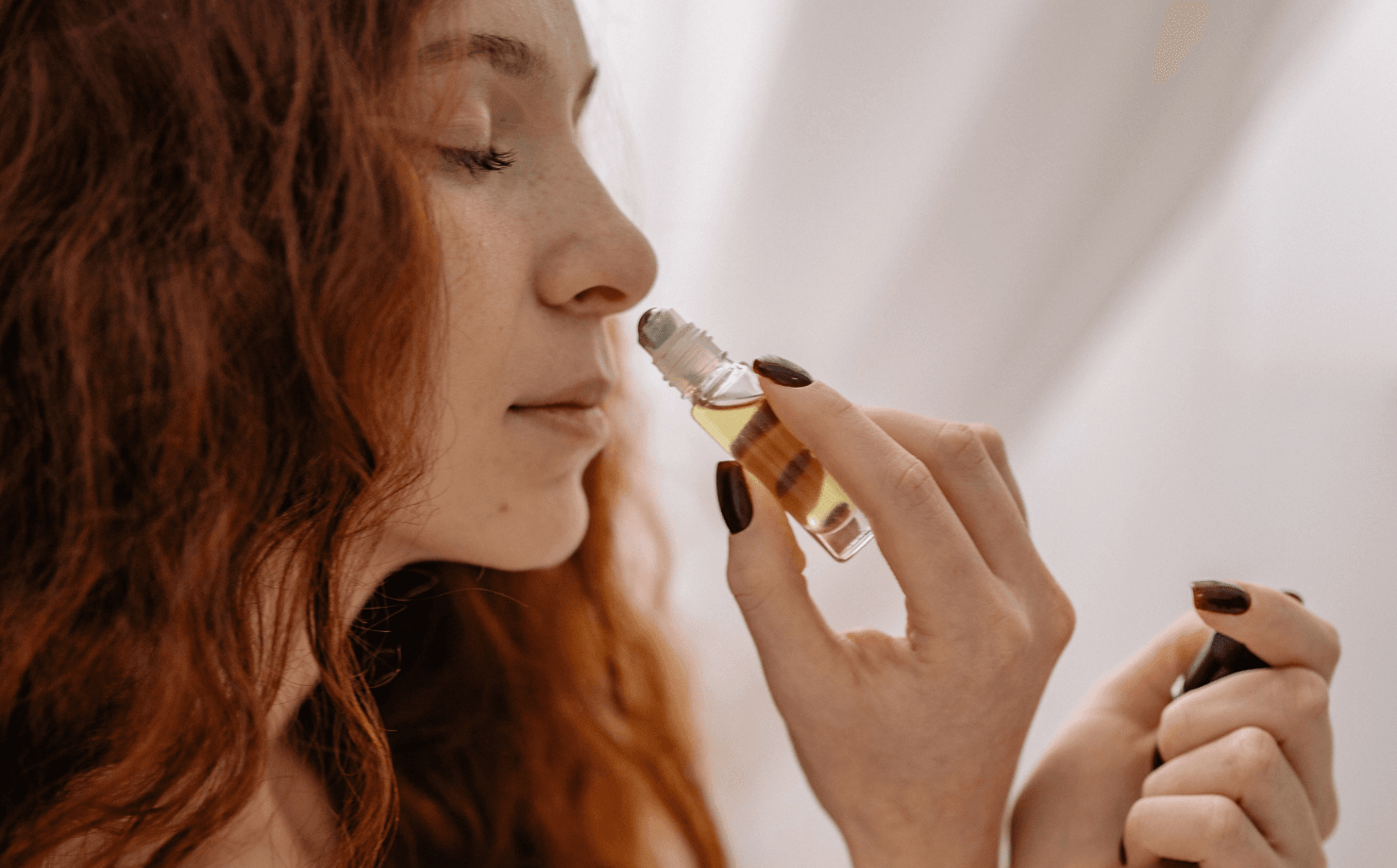
Aromatic:
- Diffusing still works; the molecules are inhaled and absorbed through your lungs
- Via your airways, they reach your bloodstream and activate TRP receptors
- The participants in my CJI workshop experienced this: they noticed the effects, even without consciously smelling the scent
- Use a diffuser or personal inhaler as you normally would
- The only difference: you don’t get the scent association, but the molecules still do their pharmacological work
Topical:
- Always dilute with a carrier oil (fractionated coconut oil, for example)
- Use 1 to 2 drops of essential oil per teaspoon of carrier oil
- Best spots for absorption: soles of the feet, wrists, neck (thin skin, good blood flow)
- Let the oil absorb for at least 15 to 20 minutes before rinsing it off
Internal (bearing the safety note above in mind):
- Only use oils explicitly labelled for internal use
- Start conservatively: 1 drop in a vegetarian capsule or diluted in 250ml of water
- Take it around 30 minutes before you want the effect (before bedtime, for instance, with sleep-supporting oils)
Oils with a powerful systemic effect
Some oils are particularly effective via topical or internal use:
- Frankincense: supports healthy brain function
- Copaiba: contains beta-caryophyllene, a plant cannabinoid that supports your endocannabinoid system
- Turmeric: known for curcumin; the oil itself is rich in turmerones and supports joints and muscles through systemic action
- Adaptiv capsules: formulated for stress support through internal use
- Deep Blue: for muscle and joint discomfort via topical application
Why this matters
The question “do essential oils work without smell” is about something bigger: do people see natural remedies as pharmacologically active, or do they think it’s just placebo?
Let me be clear: essential oils are bioactive molecules with demonstrable pharmacological effects. They bind to receptors, influence neurotransmitters, support cellular communication, are metabolised by your liver and have half-lives that can be measured. This is biochemistry, not a fairy tale.
And yes, the psychological component of smell is powerful; nobody denies that. The pharmacological action is separate from it. If you don’t have a sense of smell, you miss part of the experience, while the effectiveness remains intact.

To finish
Those two participants in my training got to experience, live, that the aromatic molecules genuinely had an effect on them. They went home satisfied, knowing that essential oils can still support their nervous system through all three application methods: aromatic, topical and internal.
Because molecules do their work, even when you don’t consciously notice the smell.
Ready to give this a go? Download the protocol, use your oils, and let’s go. Your nervous system is waiting for input.
🎁 Free download: complete smell training guide
Want to get started with smell training yourself, or do you know someone who wants to restore their sense of smell? I’ve put together a complete guide with:
- The scientifically grounded 4-oil protocol
- Step-by-step instructions
- An extensive 8-oil protocol for optimal recovery
- All the scientific studies
- Direct ordering links for the right oils
🧠 Brain training with aromatic molecules
Want more than just a PDF? I also run live brain-training sessions in which we use aromatic molecules to strengthen your nervous system and build a more resilient brain. Perfect for teams, organisations or individual programmes.
Curious what I could do for your organisation? 📧 tanja@your-good-life.nl
Tanja Holistic Health Coach • doTERRA Blue Diamond Leader • Creator of the GOOD. method

Scientific sources
- Anosmia and lavender: Yamada K, Miura T, Mimaki Y, Sashida Y. “Anosmia does not impair the anxiolytic-like effect of lavender essential oil inhalation in mice.” Life Sciences. 2013;92(24-26):1073-1079. https://www.sciencedirect.com/science/article/pii/S0024320513001926
- Dermal absorption: Herman A, Herman AP. “Essential oils and their constituents as skin penetration enhancer for transdermal drug delivery: a review.” Journal of Pharmacy and Pharmacology. 2015;67(4):473-485. https://pubmed.ncbi.nlm.nih.gov/25557808/
- Lavender absorption through skin: Cal K. “Skin penetration of terpenes from essential oils and topical vehicles.” Planta Medica. 2006;72(4):311-316. https://pubmed.ncbi.nlm.nih.gov/16557471/
- TRP receptors / post-COVID anosmia: Ceccarelli G, et al. “Olfactory training with essential oils for patients with post-COVID-19 smell dysfunction: A case series.” Integrative Medicine Research. 2023;12(2):100936. https://pmc.ncbi.nlm.nih.gov/articles/PMC10102705/
- Systematic review penetration: Mwesigwa E, et al. “Systematic Review on the Effectiveness of Essential and Carrier Oils as Skin Penetration Enhancers in Pharmaceutical Formulations.” Scientia Pharmaceutica. 2022;90(1):14. https://www.mdpi.com/2218-0532/90/1/14
- Tisserand Institute on aromatherapy and anosmia: https://tisserandinstitute.org/learn-more/aromatherapy-smell/
- Skin permeation mechanisms: Çalışkan UK, Karakuş MM. “Essential Oils as Skin Permeation Boosters and Their Predicted Effect Mechanisms.” Journal of Dermatology & Skin Science. 2020;2(3):24-30.